What the room offers
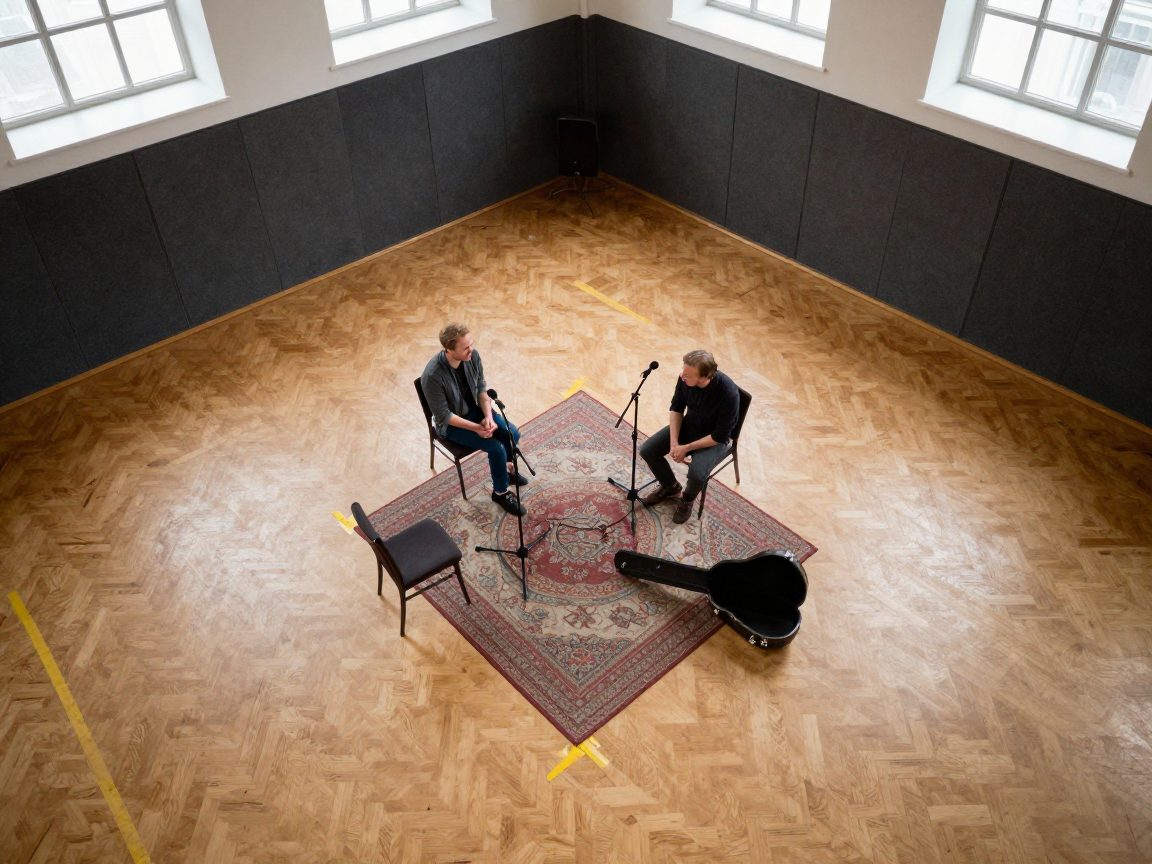
The live room is about 42 m² with wood and treatment; the control room is 22 m². We have 28 microphones and record two to 5 musicians at once. Each voice or instrument gets a dedicated channel so we can adjust balance later without replaying the whole take.
A four-hour block is €445, a full day €795 — VAT at 21% included. Sessions run Tue–Sat 09–21 by appointment at Kinkerstraat 127 in Amsterdam Oud-West.
Duo: triangle instead of a line
Two players facing in a straight line see each other well, but mics pick up the wrong instrument. We use a triangle on the rug: both angled inward, mics on stands or booms, backs toward absorption where we can.
Acoustic guitar often gets a small-diaphragm condenser at arm’s length from the twelfth fret; cello or bass slightly above the f-hole with room to bow. Vocals sit on their own axis with a pop filter, angled toward the partner for eye contact without sharing one mic line.
Managing bleed without playing muted
Bleed is normal in a shared space; the aim is control, not silence between tracks. Point the null of the mic away from the loudest source, add baffles between chairs, and add a few centimetres between guitar and vocal mics if the guitar dominates the vocal track.
Full drum kits are rare here; strings, piano, winds and vocals are our bread and butter. If you bring percussion, discuss upfront what fits 42 m² without masking everything else.
Three to five players
With three musicians we use corners of the room: nobody directly behind another player. For a quartet we add headphones or a side-fill so everyone shares one reference. Cables are taped along the floor so breaks stay safe.
Decide who leads tempo — usually vocals or the chord instrument — and tell us in the booking so we can prep click and cue mixes.
Headphones and foldback
Everyone gets an individual mix: more of themselves, less of others if needed. Foldback that is too loud kills isolation and risks feedback on sensitive mics; too quiet and people play harder than they should. Speak up during soundcheck; five minutes of tweaking beats an hour of shaky timing.
Bring in-ears if you rely on them; we stock studio headphones for anyone without a personal set.
Rehearse before the studio
Layout day is not arrangement day. Arrive with dynamics mostly settled: where it drops, where it swells, where it stops. A twenty-minute run in the live room is cheap; an hour of rewriting costs part of your €445 block.
A rough phone memo of how loud each part feels at home — not a mix, just balance — helps us pick patterns and preamp levels.
Files and next steps
After the session we deliver multitracks as agreed; we typically keep material for 9 months. Mixing elsewhere follows the same rules as how to send stems for mix: naming, sample rate and no unplanned processing on raw exports.
For mixing in-house see Mixing (remote) with 2 revision rounds included and turnaround around 10 business days once stems are complete.
Layout cheat sheet
| Setup | Starting point |
|---|---|
| Vocal + guitar duo | Triangle, guitar mic at fret, vocal on its own pop-filtered mic |
| Two strings | Room corners, mic above f-hole, back to hard reflections |
| Three vocals | Avoid a line; centre voice slightly back to reduce bleed |
| With piano | Lid open or closed agreed upfront; vocal not over the soundboard |
Book an ensemble session with player count and instruments so we reserve the right mics.